A Ph.D. is not just an academic degree; it is a marathon series of sprints that demands extreme emotional, financial, and intellectual commitment. For highly capable R&D professionals and ambitious Master’s students, the question isn’t whether you can get a Ph.D., but whether you should.
Making this decision based on a gut feeling, external pressure, or a vague desire for a title is a massive strategic error. A four-to-six year commitment of your career, capital, and mental energy should be based on data, objective self-assessment, and a clear understanding of the professional trade-offs.
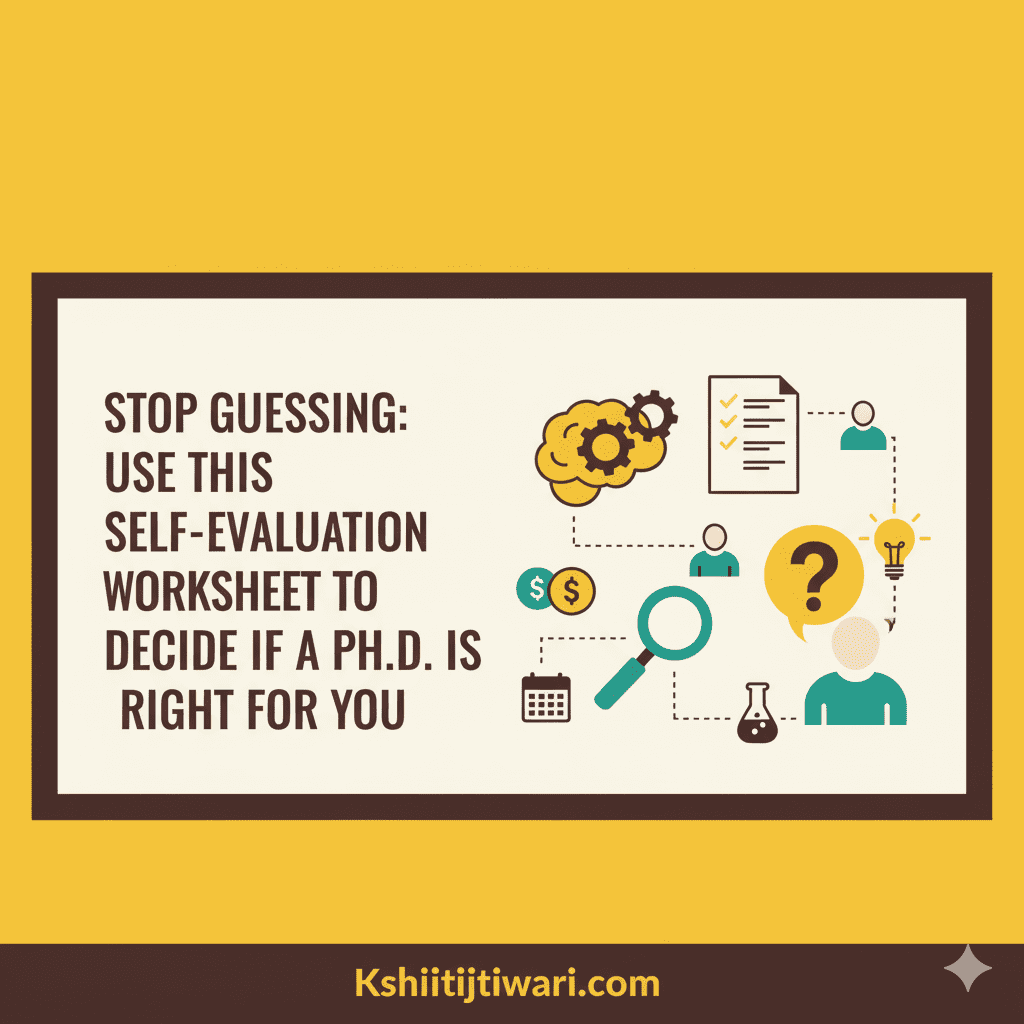
This is why I created the self-evaluation worksheet: Is PhD Right For Me Worksheet. This structured, free resource helps you move past the anxiety and conduct a rigorous self-evaluation. It is the first, crucial step in defining your Mobile Autonomy R&D Strategy—for yourself.
Contrary to popular belief, the first step in your PhD journey is being sure that PhD is indeed the right choice for you, not starting your cold email outreach to prospective PhD advisors before you are done with the self-evaluation.
Table of Contents
ToggleThe 5 Non-Negotiable Questions You Must Answer
The self-evaluation worksheet is broken down into five core categories. These categories represent the foundational pillars that support every successful Ph.D. journey. If any of these pillars are weak, the entire structure is at risk.
Emotional and Mental Resilience: Can you handle years of solitary, ambiguous work where failure is the norm and success is the outlier? This assesses your ability to manage stress and stay motivated without external validation.
Financial and Life Planning: Have you calculated the full opportunity cost? This includes tuition, stipends, location cost-of-living adjustments especially for a PhD abroad, and the trade-off against a full-time industry salary.
Core Research Passion: Do you possess the singular, intense passion needed to commit to a niche topic for half a decade? If the work feels like a job, you will not survive the inevitable setbacks.
Career Alignment: Is the Ph.D. a necessary credential for your ultimate career goal? (e.g., Lead Scientist at a Robotics Lab) or is it a detour? This ensures the degree aligns with your long-term professional trajectory.
Advisor and Environment Fit: Do you have a clear strategy for identifying a supportive, well-funded lab and advisor who can propel your work forward? (This is a preemptive check to avoid common pitfalls).
Video Guide: Watch Before You Score
To ensure you interpret the questions and scoring rubric correctly, watch this essential video guide. It clarifies the context behind each category, helping you provide the most honest and accurate answers.
Download Your Ph.D. Self-Evaluation Worksheet
This resource is designed to be a living document that you revisit as you progress through the application process. It will help you articulate your conviction when you write your Statement of Purpose and when you speak to potential advisors.
Click the link below to download your worksheet and start your strategic self-assessment immediately.
Conclusion: The Clarity You Need for the Next Step
By completing this worksheet, you gain the clarity necessary to proceed with confidence. You move from the vague “Should I?” to the assertive “I should/should not, and here is why.”
If your self-evaluation score indicates that a Ph.D. is the right path, your next challenge shifts from “Why a Ph.D.?” to “Where should I pursue it?“ The success of your research is entirely dependent on the environment.
Once you decide to proceed, your next challenge is selecting the right environment. Read our guide on Advisor-Advisee Fit: The Red Flags and Green Lights to Look for.
I've decided on a Ph.D. — What now?
If you have completed your self-evaluation and are confident in your decision to pursue a Ph.D., the next step is building a personalized application strategy, securing a highly technical research topic, and mastering the outreach process. Need help with crafting a structured approach? Click below to learn about how I can help you streamline your PhD journey.