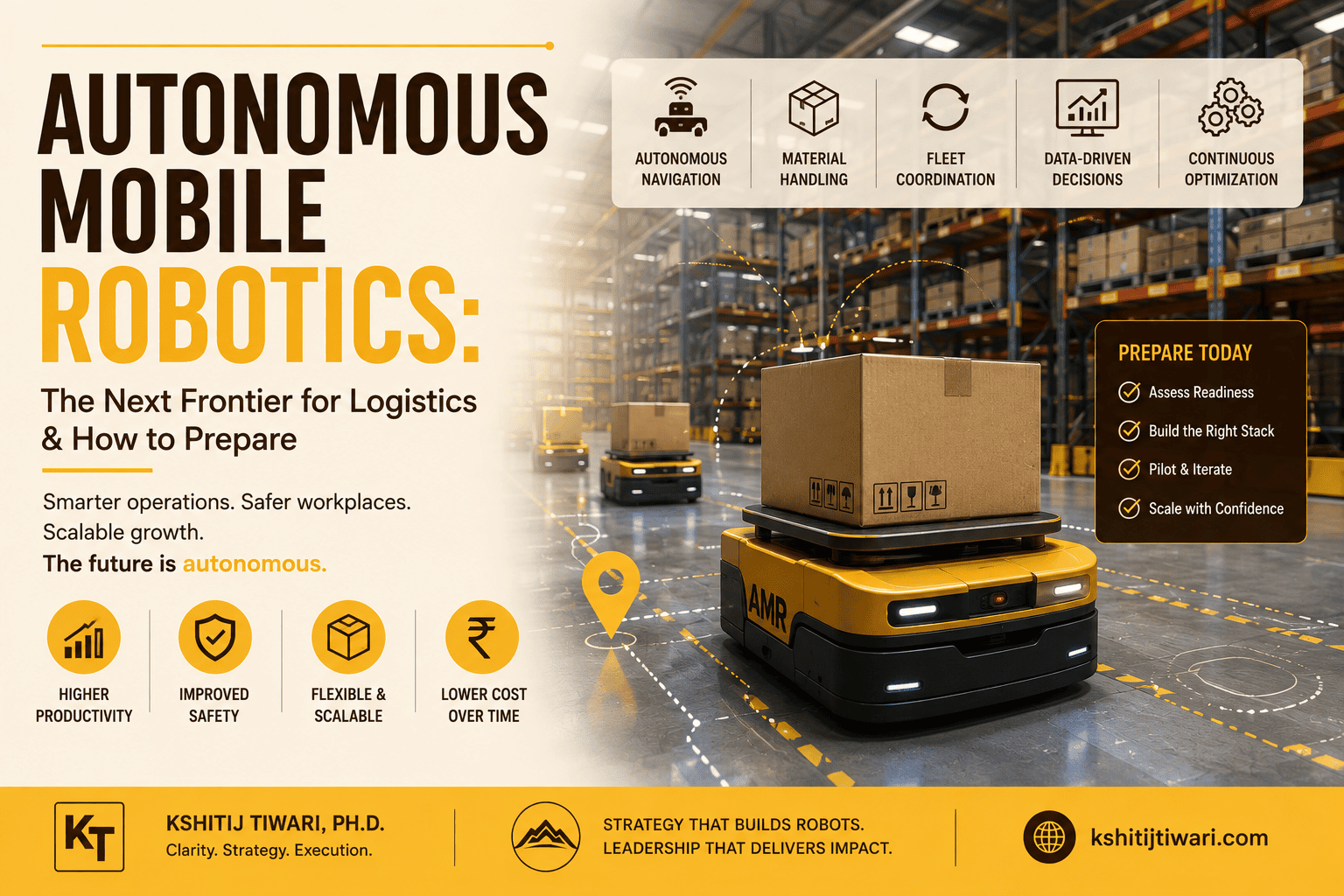
The hum of innovation is growing louder in warehouses, factories, and distribution centers worldwide. It’s the sound of Autonomous Mobile Robotics (AMRs) – intelligent machines charting their own paths, collaborating with human workers, and redefining the very essence of logistics. No longer confined to the realm of science fiction, AMRs are rapidly becoming an indispensable component of modern supply chains, heralding a new frontier of efficiency, safety, and scalability.
For businesses navigating the complexities of today’s global economy, understanding and preparing for this robotic revolution isn’t just an advantage; it’s a necessity.
Table of Contents
ToggleThe Evolving Landscape of Logistics: Why AMRs are Imperative
Before diving into the “how,” it’s crucial to understand the “why.” Several converging factors are propelling AMRs to the forefront of logistics innovation:
Exploding E-commerce Growth: The insatiable demand for faster delivery, higher order volumes, and personalized experiences puts immense pressure on traditional logistics models. E-commerce statistics consistently show double-digit growth, requiring operations to scale rapidly and efficiently.
Labor Shortages & Rising Costs: Finding and retaining skilled labor for repetitive, physically demanding tasks in warehouses is an ongoing challenge. Automation, particularly through AMRs, offers a sustainable solution to mitigate these issues and optimize labor allocation.
Demand for Greater Efficiency & Accuracy: Manual processes are inherently prone to error and bottlenecks. AMRs, with their precision and tireless operation, significantly reduce picking errors, improve inventory accuracy, and accelerate throughput.
Emphasis on Worker Safety: Human-robot collaboration, when designed thoughtfully, can dramatically improve workplace safety by offloading hazardous or strenuous tasks to machines, reducing incidents and injuries.
Supply Chain Resilience: The recent past has highlighted the fragility of global supply chains. AMRs contribute to resilience by enabling more flexible, agile, and less labor-dependent operations that can adapt quickly to disruptions.
What Exactly are Autonomous Mobile Robotics (AMRs)?
It’s easy to confuse AMRs with their predecessors, Automated Guided Vehicles (AGVs). While both automate material handling, the distinction is critical:
AGVs (Automated Guided Vehicles): These robots follow fixed, pre-defined paths, often guided by wires, magnetic strips, or sensors. They are excellent for repetitive, point-to-point movements but lack flexibility.
AMRs (Autonomous Mobile Robotics): These advanced robots use sophisticated sensors (Lidar, cameras, ultrasonics), onboard processors, and intelligent navigation software to understand their environment, build maps, detect obstacles, and dynamically choose the most efficient path. They don’t require fixed infrastructure and can operate alongside humans, adapting to changing conditions. This autonomy is their defining feature.
This distinction is crucial because the flexibility of AMRs is what makes them truly transformative for dynamic logistics environments. They can navigate around unexpected obstructions, reroute as needed, and even pick up new tasks on the fly.
Key Applications of AMRs in Modern Logistics
AMRs are incredibly versatile and can be deployed across various logistics functions:
Goods-to-Person Picking: Instead of human pickers walking miles through a warehouse, AMRs bring shelves or bins directly to a stationary picker. This dramatically reduces travel time, increases picking speed, and lessens worker fatigue. Companies like Amazon pioneered this concept with Kiva Systems (now Amazon Robotics).
Pallet & Tote Transport: Moving heavy pallets, cases, or totes between different zones (e.g., receiving to storage, storage to packing, packing to shipping) is a prime application for AMRs. They can navigate complex floor plans without human intervention.
Sortation: AMRs equipped with sorting mechanisms can rapidly direct parcels to the correct outgoing chutes or staging areas, greatly accelerating the sortation process in e-commerce fulfillment centers.
Inventory Management & Cycle Counting: Some AMRs are equipped with cameras and scanners that can autonomously patrol aisles, capture inventory data, and update WMS (Warehouse Management Systems) in real-time. This provides unprecedented accuracy and reduces the need for manual cycle counts.
Assembly Line Support: In manufacturing logistics, AMRs can deliver components to assembly line workers precisely when needed, ensuring a continuous flow and reducing downtime.
Outdoor Logistics: While primarily known for indoor use, robust AMRs are emerging for outdoor applications, such as transporting goods between buildings in a campus setting or within large port operations.
The Tangible Benefits of Adopting AMRs
The integration of Autonomous Mobile Robotics offers a compelling return on investment through several key benefits:
Increased Efficiency & Throughput: AMRs operate continuously, without breaks or fatigue, leading to higher processing speeds and greater overall output. They reduce walking time for human workers, allowing them to focus on value-added tasks.
Enhanced Accuracy: Robotics minimize human error in picking, sorting, and inventory management, leading to fewer mis-shipments and improved customer satisfaction.
Improved Scalability & Flexibility: As business needs change, AMRs can be easily reprogrammed, re-tasked, or scaled up/down by adding or removing units without extensive infrastructure changes. This is a significant advantage over fixed automation.
Optimized Space Utilization: By intelligently navigating and potentially operating in narrower aisles, AMRs can help maximize storage density within a warehouse footprint.
Reduced Operational Costs: While the initial investment exists, AMRs significantly reduce labor costs associated with repetitive tasks, decrease injury-related expenses, and optimize energy consumption compared to larger, human-operated vehicles.
Enhanced Worker Safety: By taking over hazardous or ergonomically challenging tasks, AMRs reduce the risk of accidents and injuries, creating a safer work environment for human employees.
Real-time Data & Analytics: Many AMR systems integrate with WMS and other operational software, providing valuable data on movement, task completion, and potential bottlenecks, enabling continuous optimization.
Challenges and Considerations for AMR Integration
While the benefits are clear, successful AMR integration requires careful planning and addressing potential challenges:
Initial Investment: The upfront cost of AMRs and associated software can be substantial. A thorough ROI analysis is essential.
Integration Complexity: Connecting AMRs with existing Warehouse Management Systems (WMS), Enterprise Resource Planning (ERP) systems, and other automation can be complex and requires robust IT infrastructure.
Workforce Adaptation & Training: Introducing robots into the workplace necessitates training for employees who will work alongside them. This includes safety protocols, troubleshooting, and new workflows. Resistance to change can be a factor if not managed proactively.
Infrastructure & Environment Readiness: While AMRs don’t require fixed tracks, the operational environment needs to be suitable. This includes stable Wi-Fi, clear floor space, adequate lighting, and potentially adjustments to racking or charging stations.
Cybersecurity: As connected devices, AMRs represent potential cybersecurity vulnerabilities. Robust security protocols are crucial to protect operational data and prevent unauthorized access.
Maintenance & Support: Like any machinery, AMRs require regular maintenance and technical support to ensure optimal performance and minimize downtime.
How to Get Ready: A Phased Approach to AMR Adoption
Successfully integrating Autonomous Mobile Robotics into your logistics operations is a strategic journey, not a singular event. Here’s a phased approach to consider:
Phase 1: Assessment and Strategy
Define Your Goals: Clearly identify the pain points you want to solve (e.g., reduce picking errors, increase throughput, address labor shortages) and measurable objectives.
Process Mapping: Thoroughly map out your current workflows and material flows. Identify bottlenecks, inefficient routes, and areas ripe for automation.
Feasibility Study: Evaluate your facility’s readiness. Consider floor conditions, Wi-Fi coverage, existing automation, and power infrastructure.
Vendor Research: Explore various AMR providers. Look beyond the robot itself to consider software capabilities, integration support, training, and maintenance plans. Consider vendors who offer flexible, scalable solutions.
Budgeting & ROI Analysis: Develop a detailed financial plan, including capital expenditure, operational costs, and a clear projection of return on investment based on your defined goals.
Phase 2: Pilot Program and Prototyping
Start Small: Don’t try to automate everything at once. Select a specific, contained area or process for a pilot program. This allows you to test the technology, gather data, and refine your approach with minimal disruption.
Develop a Test Plan: Establish clear metrics for success for your pilot. How will you measure efficiency gains, accuracy improvements, and worker feedback?
Integration Testing: Test the interoperability of the AMRs with your WMS and other existing systems. Ensure data flows smoothly and accurately.
Workforce Engagement: Involve your employees early. Provide training, address concerns, and solicit feedback. This fosters acceptance and identifies practical challenges from those on the ground.
Data Collection & Analysis: Meticulously collect data from your pilot. Analyze performance against your goals and identify areas for optimization.
Phase 3: Scaled Deployment and Optimization
Iterate and Refine: Based on the pilot’s success and lessons learned, make necessary adjustments to your strategy, workflows, and AMR deployment plan.
Phased Rollout: Expand the AMR deployment incrementally across your facility, applying insights from your pilot.
Comprehensive Training: Ensure all relevant personnel receive thorough training on operating, monitoring, and maintaining the AMRs, as well as working safely alongside them.
Performance Monitoring & Continuous Improvement: Implement ongoing monitoring of AMR performance. Use collected data to identify further optimization opportunities, such as route adjustments, task prioritization, or software updates.
Long-term Support: Establish robust maintenance schedules and support agreements with your AMR vendor to ensure maximum uptime and longevity of your investment.
Whether you are evaluating an AMR deployment, developing a new autonomy product or scaling an existing robot, these decisions should be connected to a broader robotics R&D strategy rather than treated as a standalone technology project.
The Future is Mobile and Autonomous
Autonomous Mobile Robotics are not merely a technological upgrade; they represent a fundamental shift in how logistics operations will be designed and executed. They offer a powerful solution to persistent challenges like labor shortages, rising costs, and the relentless pressure for speed and accuracy in an e-commerce-driven world.
By embracing AMRs strategically and proactively, businesses can unlock unprecedented levels of efficiency, build a more resilient supply chain, and create safer, more engaging work environments. The next frontier for logistics is here, and it’s moving autonomously. Are you ready to join the journey?
Ready for a Strategic Discussion?
Your robotics project or academic career deserves a strategic roadmap built on international, Ph.D.-level expertise. Let’s map out your path to accelerated results.